2025 · Procedural Environment
Urban Environment
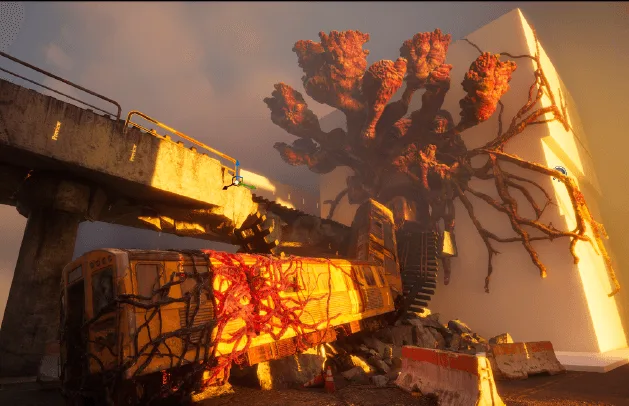
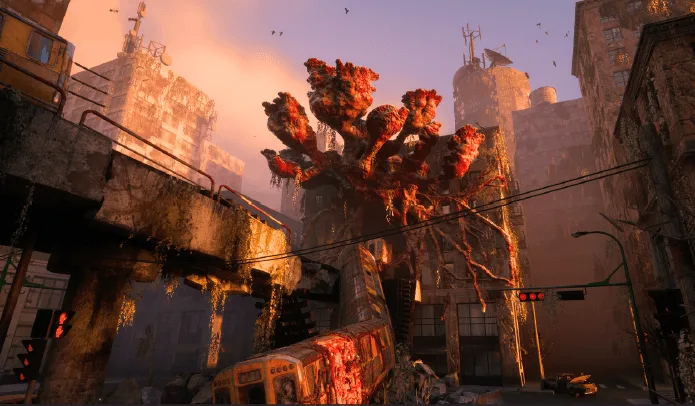
A post-apocalyptic 3D environment inspired by a fungal-infected world, centered on a derailed train suspended between buildings and overtaken by procedural organic growth.
- Year
- 2025
- Type
- Procedural Environment
 YouTube ↗
 Bilibili
Process gallery
Process & Details
01
Concept
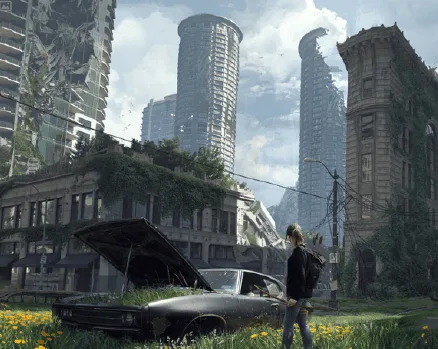
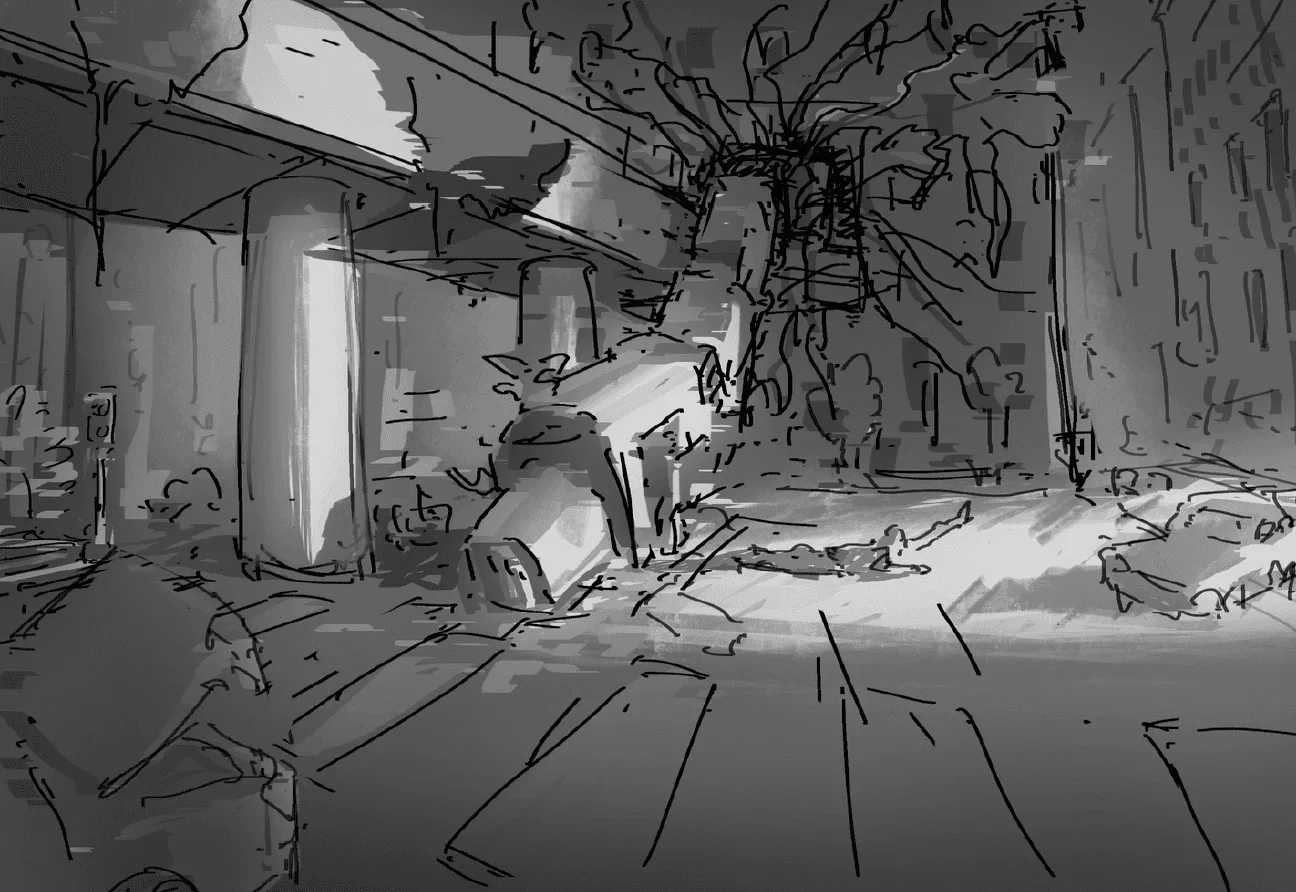
Inspired by the fungal-infected world of "The Last of Us," my initial concept was to create a post-apocalyptic environment where mutated fungi have overrun the abandoned city, gradually forcing out the surviving human beings.
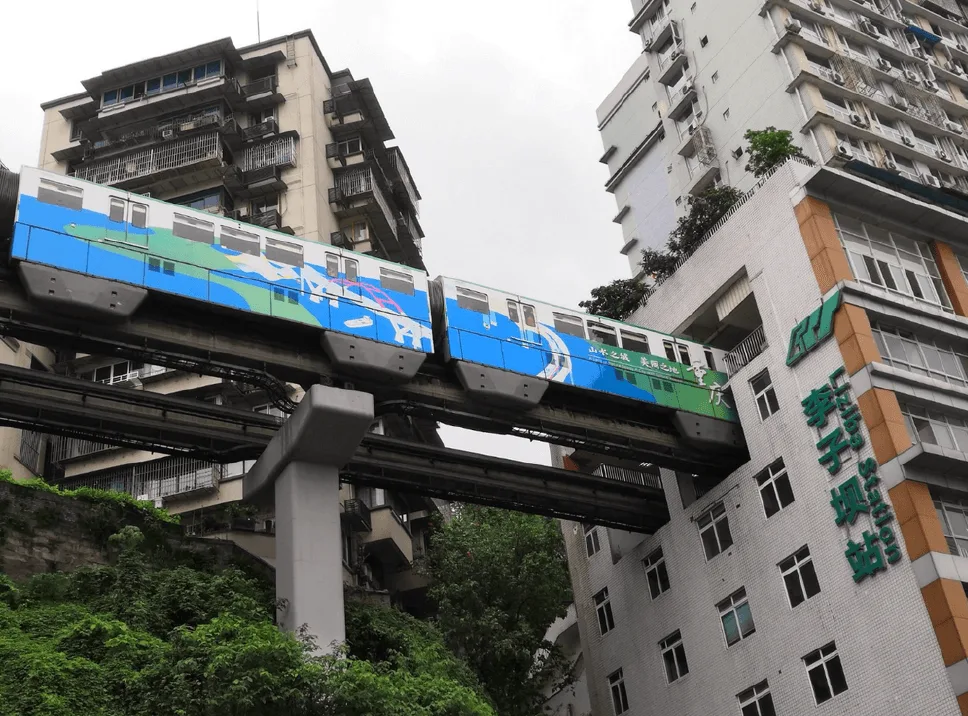
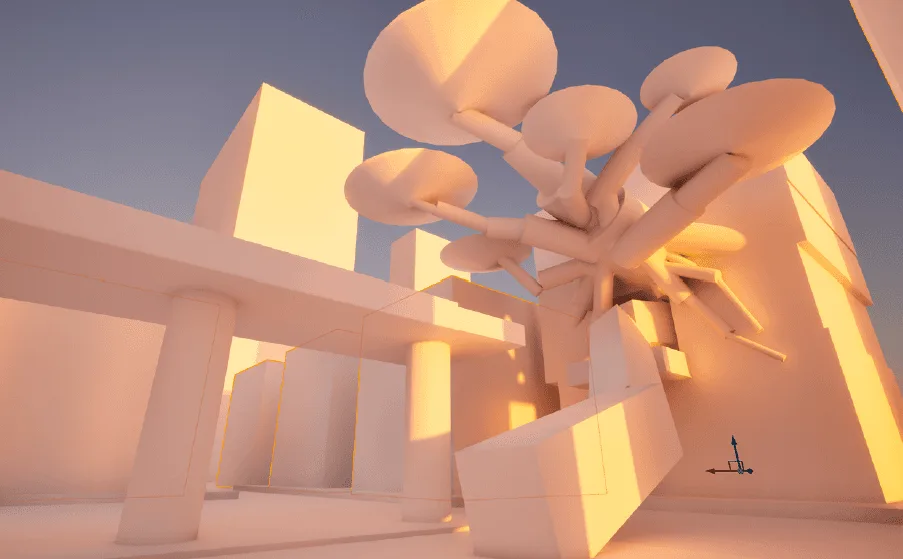
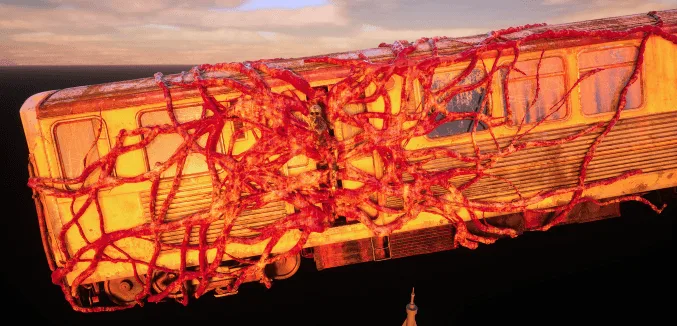
The focal point of the scene is inspired by a railway station in Chongqing, China, where trains run directly through buildings. In my post-apocalyptic setting, I imagined a derailed train that passed through buildings is now suspended and entangled by massive fungal structures.
02
Assets
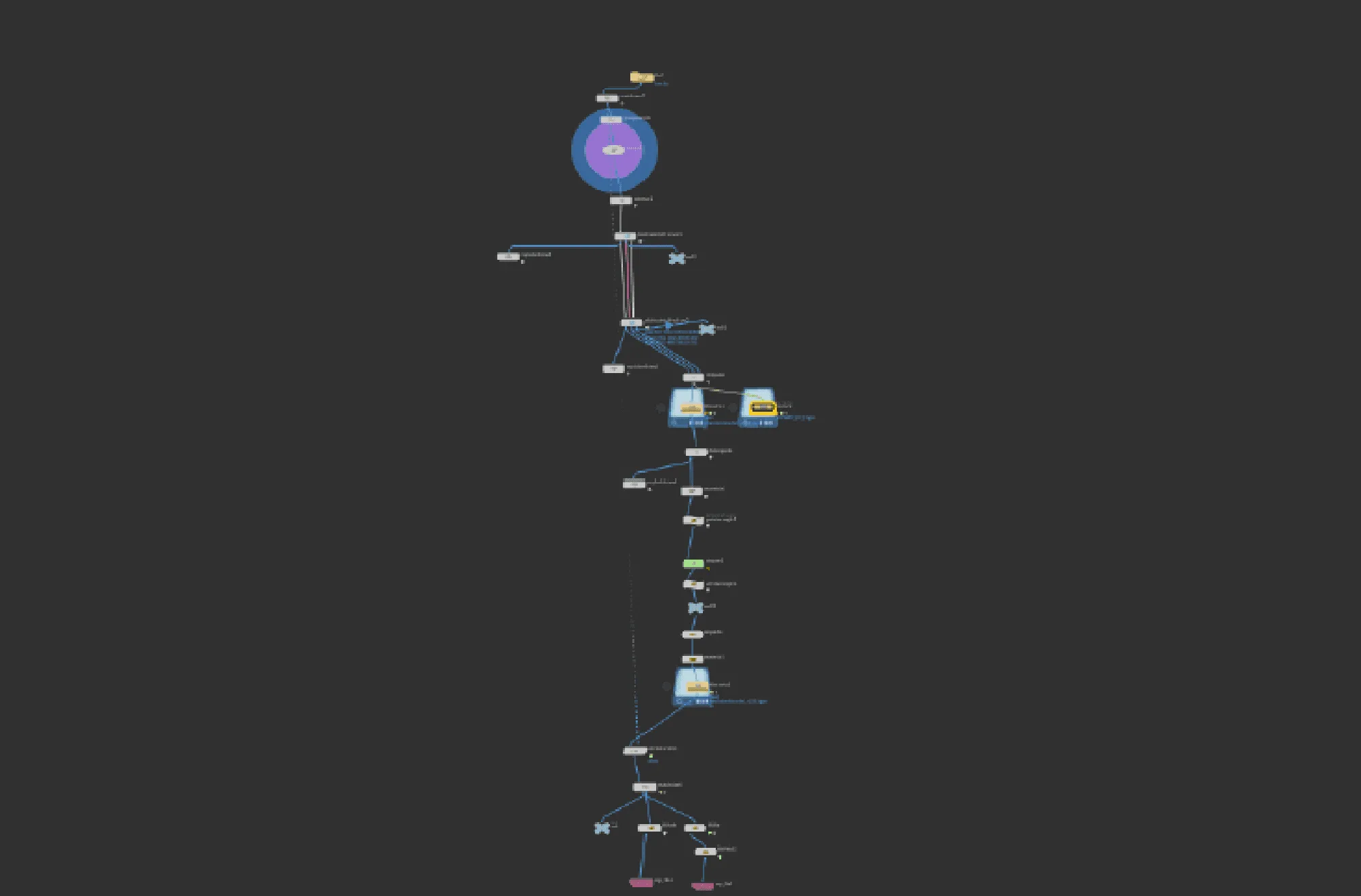
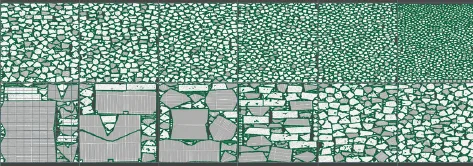
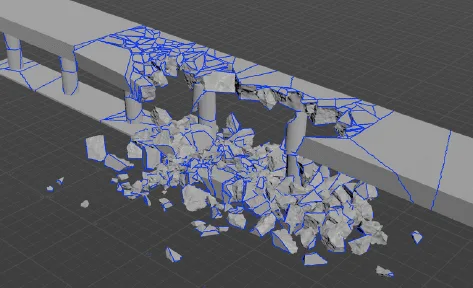
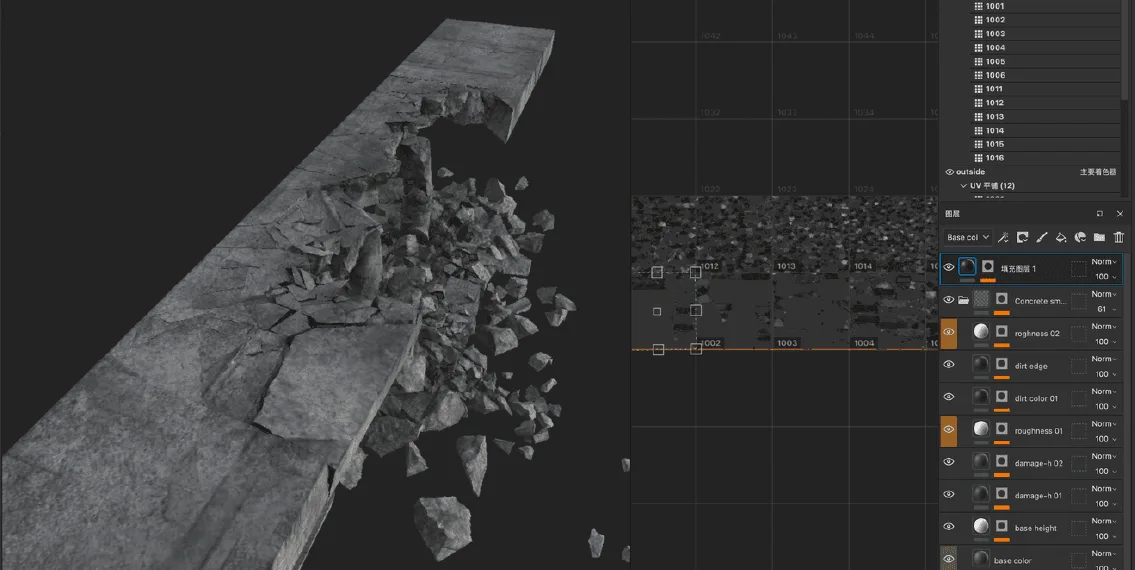
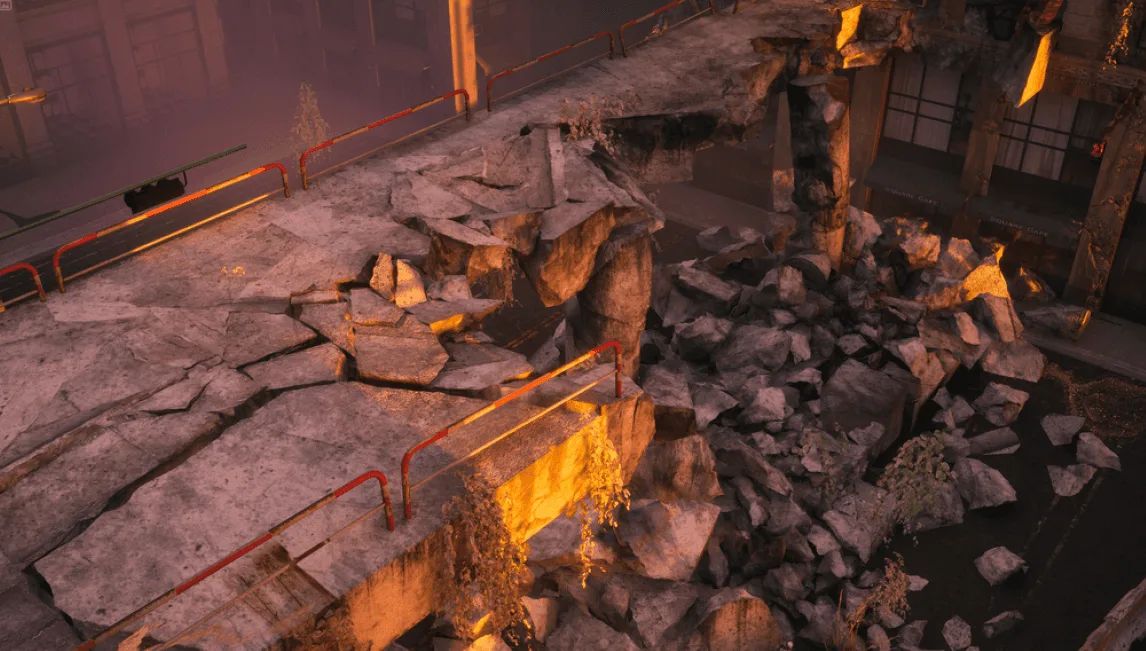
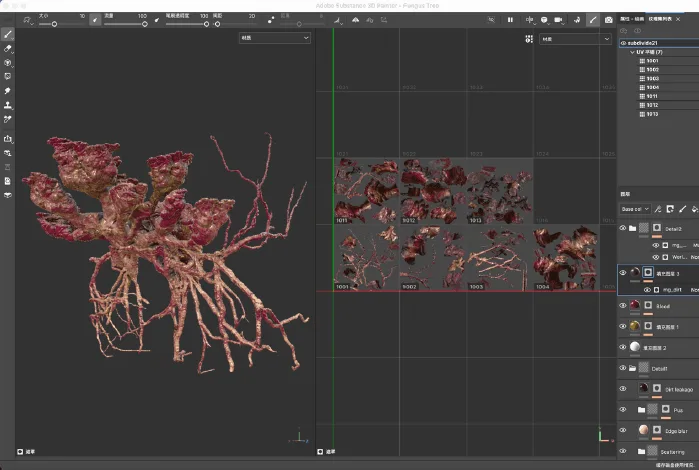
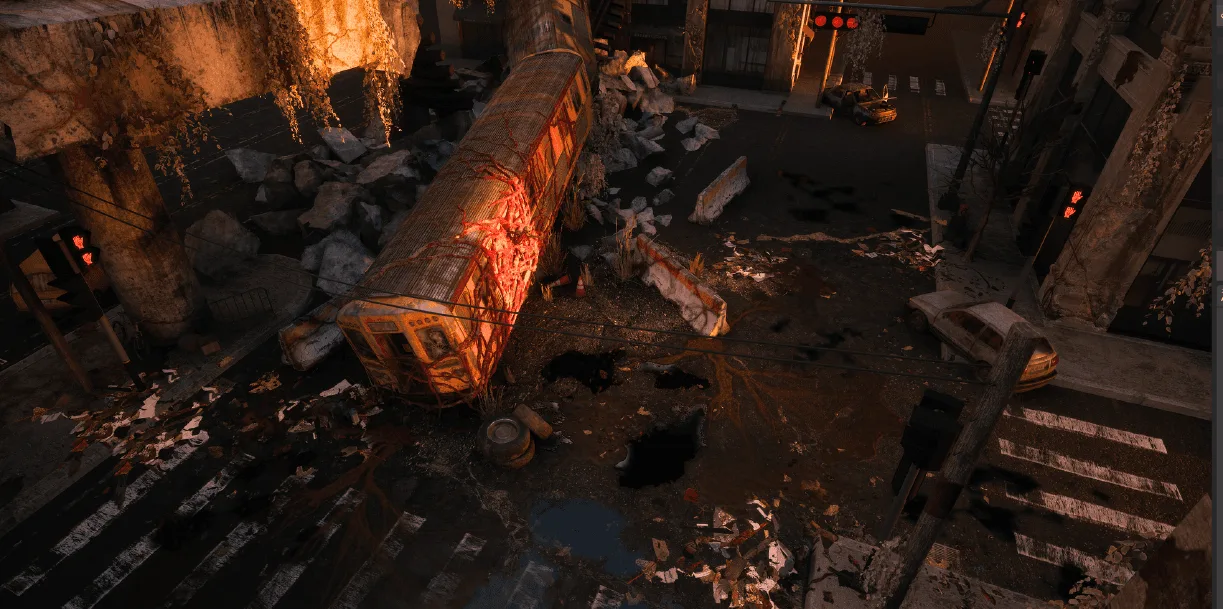
I used Houdini's RBD (Rigid Body Dynamics) fracture system to simulate the broken bridge to achieve realistic destruction, implemented a multi-UDIM UV workflow to unwrap UV for the fractured pieces.
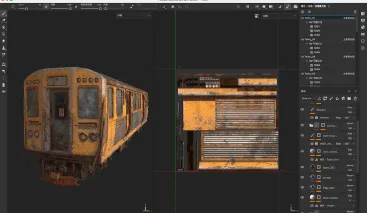
Created the textures using Substance Painter.
03
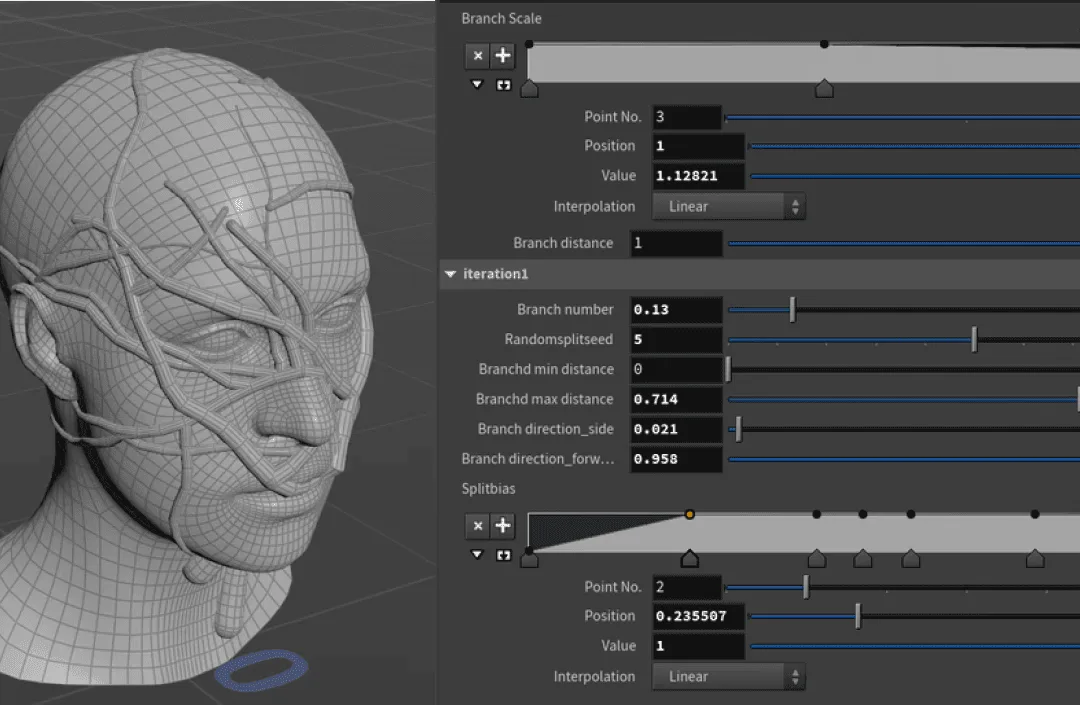
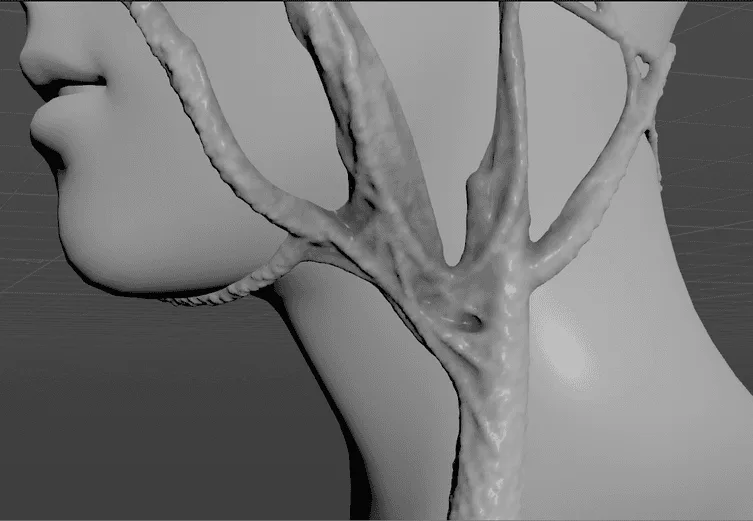
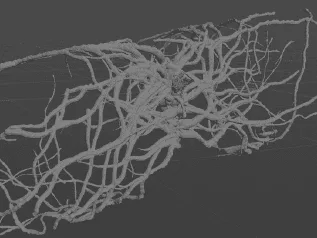
Procedural Tool — Procedural Generating Branches
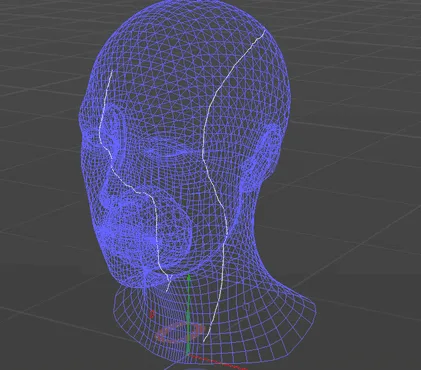
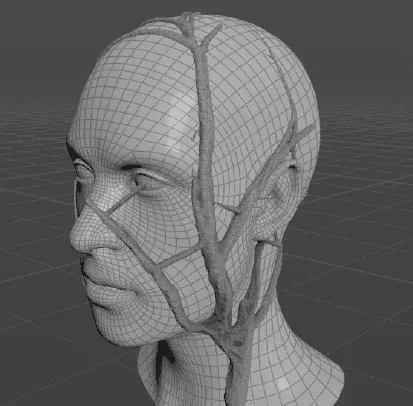
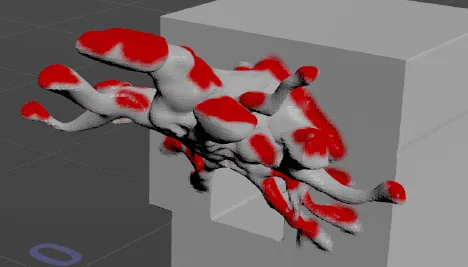
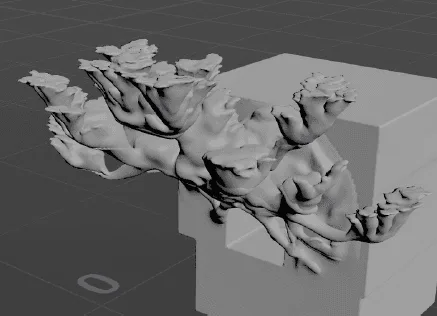
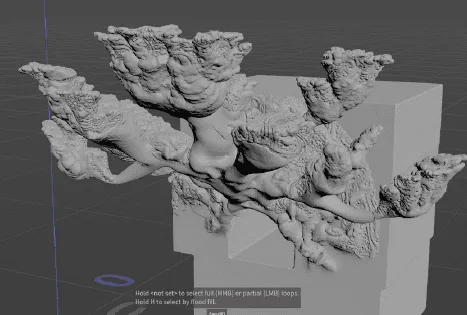
This tool enables users to procedurally generate branches aligned with their models, with adjustable parameters for different visual effects. Created fungi wrapping around the train using it.
- Import model
- Generate curves
- Generate model based on curves
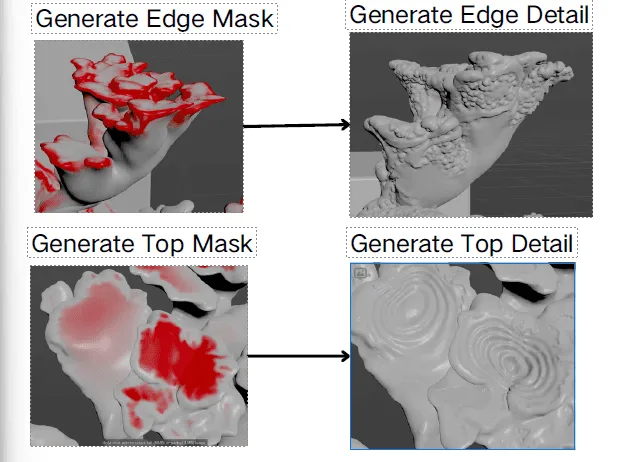
- Use procedural methods to create surface details and merge branch models for a natural appearance
04
Procedural Tool — Procedural Generating Fungal
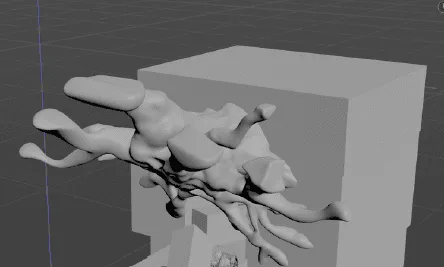
This tool, created in Houdini, procedurally simulates the growing process of a fungal structure. Users only need to import a base model and paint masks on desired areas to generate fungi automatically.
- Import model
- Paint mask for target area
- Simulate fungal growth
- Create surface details for the fungal structure
05
Texture Refinement
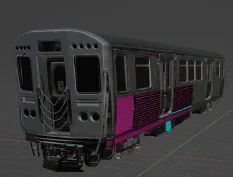
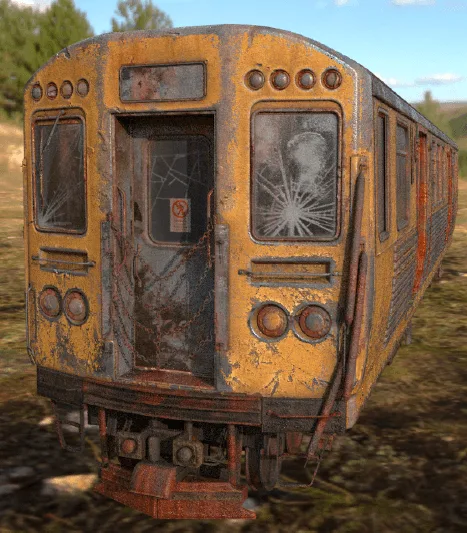
The train model was sourced online. I repainted its textures in Substance Painter to give it a broken appearance that aligns with my fungal color palette.
06
Polish the Environment
After completing the focal point, I refined the overall environment by:
- Adding buildings, city infrastructure, and props
- Placing decals and vegetation to enrich surface detail
- Adjusting height fog and lighting to enhance atmosphere and depth
Tools
Technical stack.
- Unreal Engine
- Houdini
- VEX
- RBD
- Substance Painter