← Back to filtered projects

2025 Β· Narrative Environment

Interior Scene

A post-apocalyptic interior scene telling the story of an infected man while fungus continues to consume his body and the room around him.

Year
2025
Type
Narrative Environment
Interior Scene hero artwork

Overview

What I built and why.

A post-apocalyptic interior scene telling the story of an infected man while fungus continues to consume his body and the room around him.

My responsibilities

My contribution.

Technical breakdown

01

Slime Mold Texture Generation Tool

I built a Substance Designer system that simulates branching organic growth through iterative patterns, directional gradients, and mask-based layers. Parameters control branch shape, length, thickness, subdivision, fine hyphae, and edge detail.

02

Main Character Process

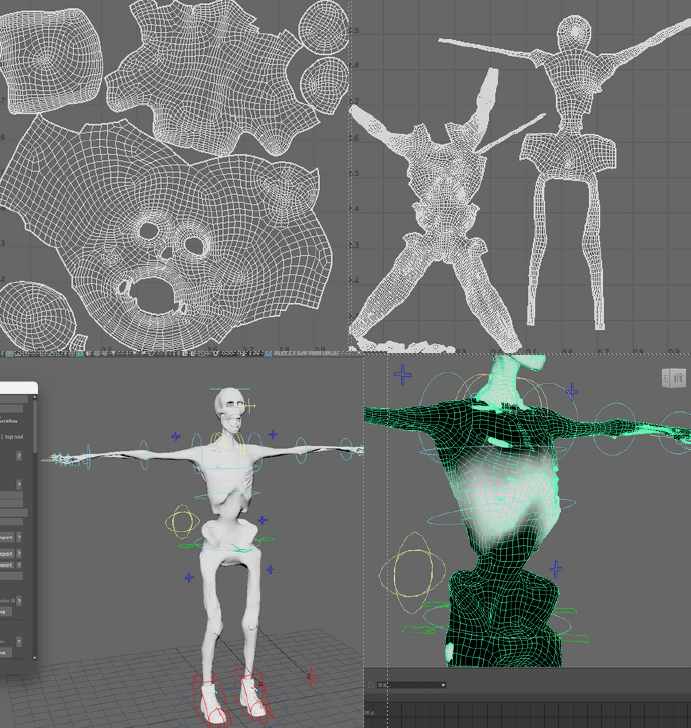
The character was sculpted in ZBrush, unwrapped and rigged with the ADV plugin, textured in Substance Painter, and posed in Unreal. Clothing, props, and fungal layers were added to complete the scene.

03

Final Environment Polish

Slime mold decals unify the fungal theme. Curtains and wooden planks frame the window and create a subtle rim light, while secondary lighting emphasizes the handgun and farewell letter.

Tools

Technical stack.

Process gallery

Images and their original notes.

Interior Scene β€” Slime Mold Texture Generation Tool, image 1Interior Scene β€” Slime Mold Texture Generation Tool, image 2Interior Scene β€” Slime Mold Texture Generation Tool, image 3Interior Scene β€” Slime Mold Texture Generation Tool, image 4Interior Scene β€” Slime Mold Texture Generation Tool, image 5Interior Scene β€” Slime Mold Texture Generation Tool, image 6

01

Slime Mold Texture Generation Tool

I created a procedural slime mold texture generation system in Substance Designer. The graph simulates organic branching growth using iterative patterns, gradient direction control, and mask-based layering.

Key parameters such as branch shape, length, thickness, and subdivision allow flexible control over variation. Additional fine hyphae and edge details are generated procedurally to enhance realism.

The final textures are exported to Unreal Engine and used in a decal master material, enabling reusable and scalable fungal surface application across the scene.

Interior Scene β€” Main Character Process, image 1Interior Scene β€” Main Character Process, image 2Interior Scene β€” Main Character Process, image 3Interior Scene β€” Main Character Process, image 4Interior Scene β€” Main Character Process, image 5Interior Scene β€” Main Character Process, image 6

02

Main Character Process

The character was sculpted in ZBrush based on a skeleton model. After modeling, I unwrapped the UV and used the ADV plugin for rigging and painting weights, followed by pose testing.

For texturing, I created the base texture in Substance Painter and added slime mold layers to the character using various masks and overlays.

Finally, the character was imported into Unreal Engine, where I adjusted the character pose, added additional clothing and props, and refined the final presentation within the interior environment.

Interior Scene β€” Final Environment Polish, image 1Interior Scene β€” Final Environment Polish, image 2Interior Scene β€” Final Environment Polish, image 3Interior Scene β€” Final Environment Polish, image 4

03

Final Environment Polish

In the final stage, I refined the interior environment to strengthen narrative focus and visual cohesion.

I applied slime mold decals to the walls and surrounding surfaces to enhance detail and unify the fungal theme. Curtains and wooden planks were placed to frame the window, creating a subtle rim light on the character without overpowering the scene. A secondary light source was added to highlight the handgun and farewell letter, reinforcing the storytelling elements.

Through lighting adjustments, prop placement, and material refinement, the scene achieves a balanced composition and stronger atmospheric impact. Third-party marketplace assets were used for background elements, with material tweaks and scene-level adjustments to maintain consistency with the project’s narrative and atmosphere.